
Engineering Reliable Telecommunications in Polar Bear Country
Updated: Aug 31
How Tamazari Kept Essential Services Running Amid Ice, Isolation, and Wildlife Risks

SUMMARY
Tamazari supported AT&T Alascom in keeping communications running for more than 300 remote Alaskan villages. Despite extreme weather, limited access, wildlife risks, and tight budgets, the team maintained stable analog satellite service backed by a centralized hub: Eagle River Earth Station. These systems delivered dependable phone lines, basic internet, and emergency communication for communities spread across one of the harshest environments in the world.
CLIENT BACKGROUND
AT&T Alascom, a subsidiary of AT&T, is federally mandated to provide communications to isolated Alaska communities that rely on satellite connections for 911, school networks, government operations, and basic phone and internet. These villages, many reachable only by helicopter or small aircraft, depend on aging infrastructure that receives limited funding yet requires a high level of technical expertise given the challenging arctic conditions.

Eagle River Earth Station
CHALLENGE
The team worked across vast and difficult terrain marked by blizzards, restricted flight windows, and constant wildlife risks—including polar bears that required crews to carry protection during site visits. Equipment was often damaged by animals or the cold, and most villages had no local technical support. Strict budgets ruled out costly digital upgrades, forcing reliable, low-cost solutions that could survive the environment. Building trust with native communities was also essential, as projects relied on shared stewardship of equipment.
“We went armed every time we went out—not for grizzlies, but for polar bears.”
Tim Bagwell, Lead Project Manager

AT&T Alascom System Map
SUCCESS CRITERIA
Maintain 99.99% uptime for phone and basic internet services
Ensure uninterrupted 911 and emergency communications
Keep school and government networks active across all sites
Deliver reliable performance under strict budget limits
Prepare systems for seasonal weather and solar activity
SOLUTION
Tamazari engineered a cost-effective communications strategy that met federal requirements without exceeding AT&T’s budget. The solution relied on proven analog satellite technology (DAMA) paired with centralized control through the Eagle River Earth Station—the primary hub where all satellite links converged.
Eagle River Earth Station housed three 60-foot satellite dishes, each connected to different satellite feeds that carried voice traffic, data, and other critical communications. From this central point, Tamazari managed routing, signal integrity, and redundancy for hundreds of remote village sites. By combining resilient satellite links, redundant paths, and stable legacy technology, the team created a communications backbone capable of withstanding arctic weather, remote geography, and limited construction windows—while maintaining near-perfect uptime.
“Older tech isn’t bad tech when reliability matters more than new features.”
Tim Bagwell, Lead Project Manager
IMPLEMENTATION
Execution required precision planning, strong local relationships, and deep satellite systems expertise.
At the Eagle River Earth Station, the team monitored and maintained multiple satellite feeds, aligned large-diameter dishes, resolved interference issues, and ensured consistent signal delivery to downstream sites. In the field, we coordinated FCC site licensing and managed civil engineering vendors responsible for foundations, geothermal heating, power systems, and equipment shelters. Every site visit required air transport—typically helicopters—and close coordination with village leaders to build trust and safeguard equipment.
Day to day, we aligned satellite links, validated network performance, and scheduled maintenance around narrow weather and construction windows. Work blended centralized network management with hands-on field operations in an environment where weather shifts, radio noise, or wildlife encounters could disrupt even the best-laid plans.

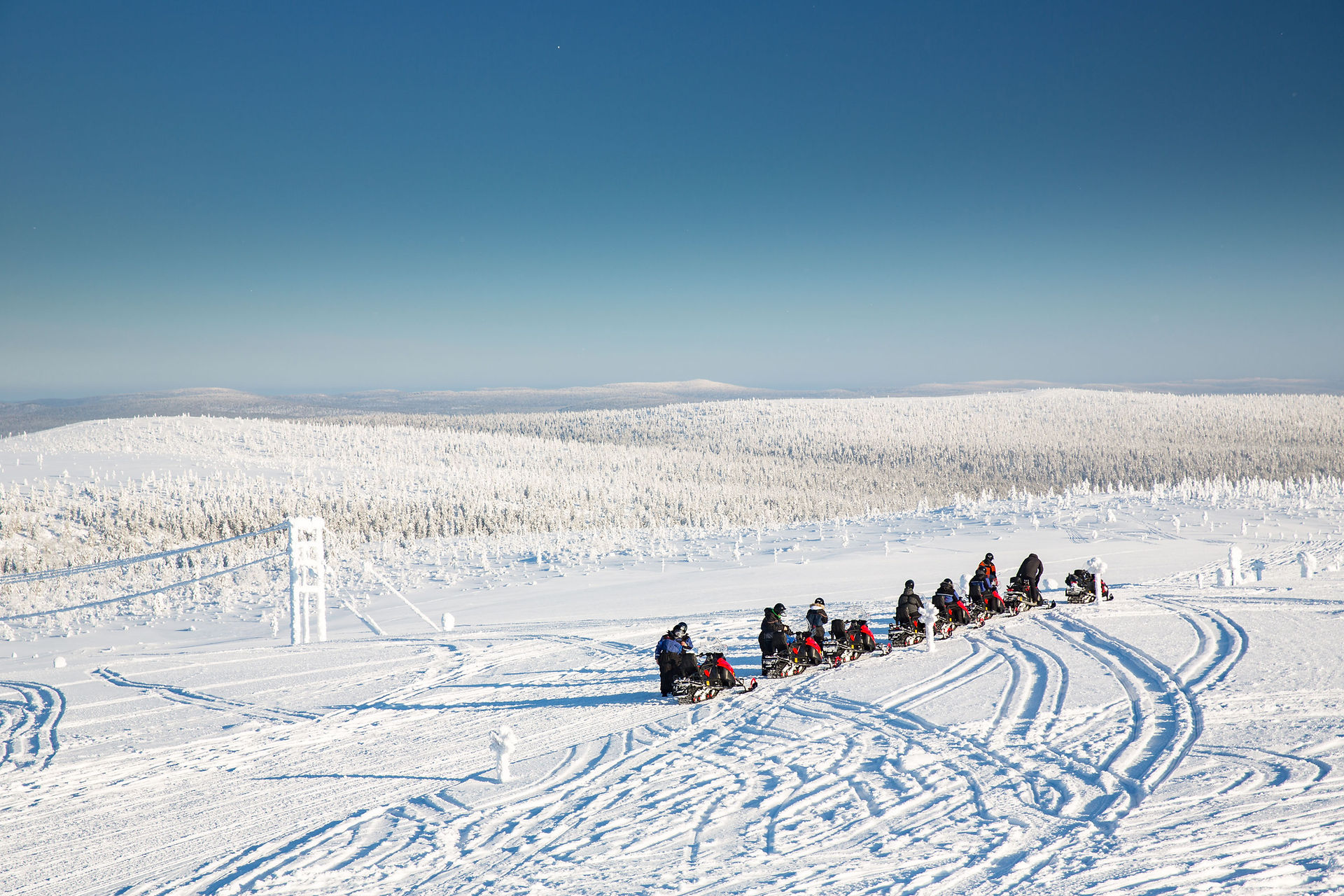

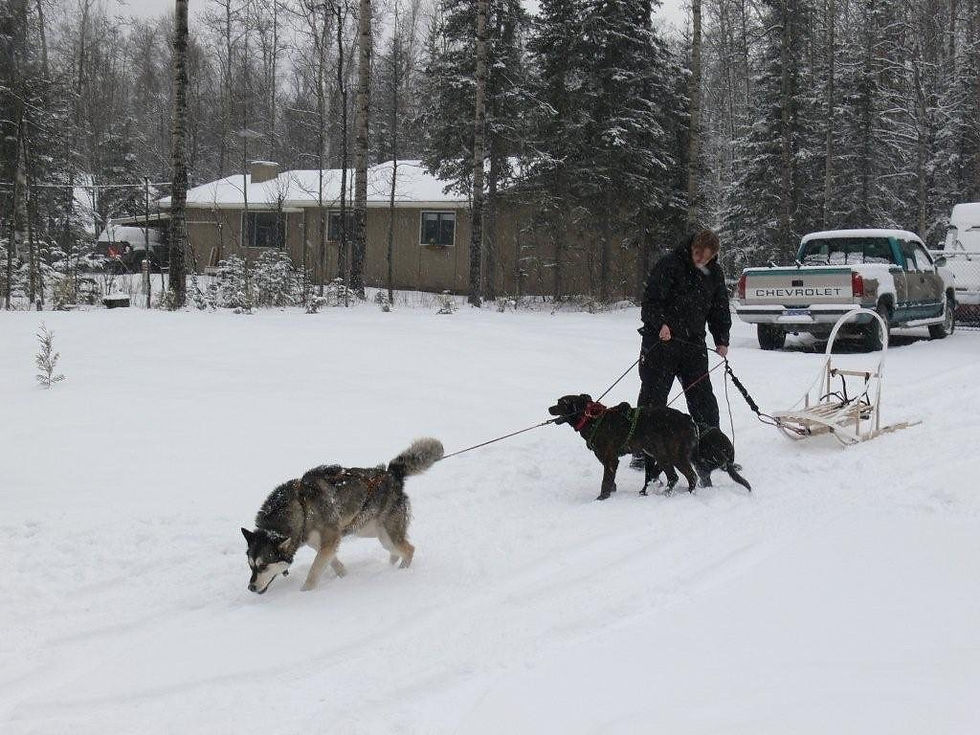
Tim Bagwell, Lead Project Manager, with his sleigh dogs.
RESULTS
The project achieved four-nines uptime across hundreds of remote sites, maintaining stable communications even during statewide fiber outages. Emergency services stayed online, school and government networks remained reliable, and communities gained steady access to essential internet and phone services. Most importantly, the system continued operating through severe storms and arctic conditions, ensuring uninterrupted connectivity across isolated regions.
"If we didn’t maintain communications, quality of life in these villages would suffer—education, safety, businesses, all of it.”
Tim Bagwell, Lead Project Manager
LONG-TERM VALUE
The work protected vulnerable communities by preserving access to communication systems crucial for safety, education, and daily activities. Reliable analog infrastructure extended the life of existing assets without major expense as well as strengthened trust between service teams and village residents. Above all, this project created a sustainable model for long-term operations in areas where digital upgrades are financially unrealistic.
KEY LEARNINGS
Strong community relationships are essential for access and equipment security
Older technology can outperform modern systems when reliability and cost are key
Natural events like solar conjunctions require precise preparation
Safety protocols must be rigorous in extreme environments
Learn more about our modernization services and recent projects.
About Tamazari
Tamazari is a Washington-based technology modernization and execution consultancy serving utilities, fleet operators, public agencies and critical infrastructure organizations across the U.S. Our work spans energy IT, SCADA, GIS, ERP/SAP, enterprise modernization, telecom infrastructure, data centers and fleet telematics.
