
The Utility Knowledge Cliff: The Hidden Risk Behind an Aging Energy Workforce
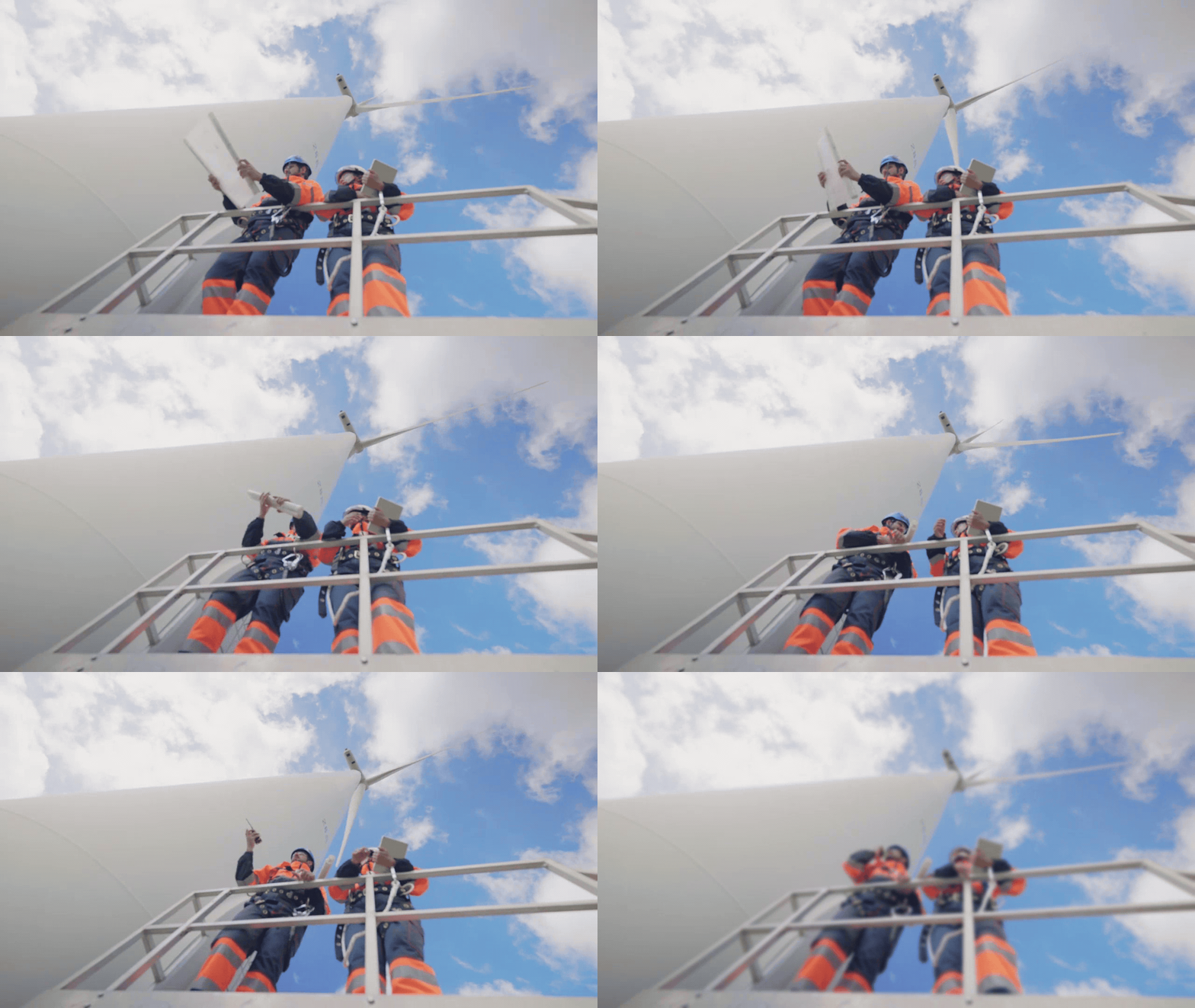
The utility industry has spent years preparing for aging infrastructure. But another critical asset is aging at the same time—its workforce. According to Deloitte, for every new utility worker under age 25, there are more than five workers age 45 or older.[1] This growing age imbalance puts utilities at risk of losing decades of experience and institutional knowledge as seasoned employees approach retirement. In other words, utilities are approaching a knowledge cliff.
Experienced operators, engineers, field technicians and managers carry decades of practical knowledge about infrastructure that may never appear in a procedure, system manual or asset record. They know which alarms demand immediate attention, how aging equipment behaves under stress and why certain procedures were changed after past failures.
When those employees retire, much of that expertise risks disappearing with them. And the timing couldn't be worse. As utilities accelerate grid modernization, adopt new technologies and navigate increasingly complex infrastructure, they're at risk of losing the very expertise needed to make those transitions successful.
Utility Workforce Retirements Are Creating an Operational Risk
Replacing an employee is relatively straightforward on an organizational chart. Replacing 25 or 30 years of experience is not. Utility employees often work in highly specific operating environments where expertise accumulates over decades. Two substations may contain similar equipment yet have completely different histories. Two control systems may perform the same function but reflect years of different configurations, exceptions and workarounds. That context matters.
Imagine a senior SCADA operator who has spent years learning which recurring alarms indicate a real problem, which are caused by known system behavior and which operating procedures exist because of incidents that happened long before newer employees arrived. If that knowledge resides primarily with one person, a retirement does more than create a vacancy.
It creates an operational blind spot.
Recent knowledge-management research found that many organizations still lack consistent strategies for capturing expertise from employees approaching retirement.[2] In simple terms, companies can preserve every server, application and document and still lose the knowledge required to operate them effectively.
Why Utilities Can’t Simply Hire Their Way Out of the Knowledge Cliff
Hiring experienced replacements might seem like the obvious solution. However, the current labor market makes that difficult. A 2025 global energy workforce study found that roughly 60% of surveyed energy employers were experiencing labor and skills shortages. Those shortages were already contributing to project delays, cost pressure, reduced operational capacity and reliability concerns.[3]
The demographic math makes the challenge even more significant. Between now and 2035, approximately two out of every three new energy-sector hires will be needed simply to replace retiring workers.[3] Utilities are not recruiting into an abundant labor market. They are competing for a limited pool of engineers, technicians, skilled tradespeople and operators at the same time the industry is expanding.
And even when recruiting succeeds, a qualified new employee does not immediately possess institutional knowledge. A newly hired engineer may understand electrical systems extremely well but know little about why a particular utility configured its infrastructure the way it did. A new operator can learn the software without knowing the history behind hundreds of operating decisions embedded within it. That knowledge still has to be transferred.
Grid Modernization Is Creating a Second Utility Skills Gap
There is another complication. Utilities do not simply need to preserve what experienced workers know. They must simultaneously build expertise around what comes next. Grid modernization, cloud platforms, advanced analytics, automation, AI, modern SCADA environments and integrated enterprise systems are changing how utility work gets done.
The investment is already happening. Ninety-two percent of energy companies surveyed in recent industry research planned digital technology investments. At the same time, 91% of power and utilities executives said their ability to reskill employees would help determine organizational success over the next five years.[4] Yet only 26% said their organizations were currently retraining existing employees.[4] That gap should concern utility leaders.
Consider a legacy SCADA modernization project. The utility needs experienced employees to explain existing controls, system dependencies, operating procedures and unusual conditions. At the same time, employees need to learn new interfaces, workflows and responsibilities. If experienced employees leave before their knowledge is transferred while remaining employees have not been adequately prepared for the new environment, the organization can end up with two knowledge gaps at once. The utility risks losing critical knowledge of its legacy systems before employees are fully prepared to operate their replacements.
As a result, a modernization project can technically go live while the organization remains operationally unprepared. Technology cannot compensate for weak processes, missing context or an unprepared workforce.
The utilities that navigate the knowledge cliff successfully will not wait until retirement notices arrive. They will identify vulnerable roles early, capture critical expertise while experienced employees are still available and build knowledge transfer directly into modernization programs.
Knowledge Transfer Should Be Part of Utility Change Management
This is why the knowledge cliff is more than a workforce challenge. It's a change management problem. Utilities need a deliberate approach to transferring institutional knowledge, ensuring that decades of experience become capabilities the next generation can build upon.
Yet capturing knowledge is only half the challenge. Employees also need to know how to apply it. A 200-page procedure library has limited value if employees cannot confidently apply that information during an outage, system alarm, customer issue or operational decision.
Knowledge needs to move from individual expertise to organizational capability. That means connecting knowledge capture with mentoring, role-based learning, train-the-trainer programs, practical job aids and hands-on experience. Readiness should ultimately be measured by whether another employee can perform the work independently, not whether a training module was completed.
Modernize With Momentum by Protecting What Your Workforce Knows
At Tamazari, we believe workforce readiness should be part of modernization from the beginning, not an afterthought. We bring project management and organizational change management together to ensure employees are prepared for the changes new technology introduces.
Our experience includes a $40M+ utility SAP transformation involving a 150+ person delivery team and more than 500 users. By embedding change management throughout implementation, we helped employees adapt to new workflows while maintaining essential business operations.
The knowledge cliff presents a challenge utilities can't solve through hiring or technology alone. As experienced employees retire, the organizations that successfully preserve their knowledge will be better prepared to modernize, adapt and maintain reliable operations.
Your workforce has decades of knowledge worth keeping.
We'll help you carry it forward.
Tamazari is a minority-, veteran-, woman-owned professional services firm and execution consultancy serving utilities, fleet operators, public agencies and critical infrastructure organizations across the U.S. Our work spans energy IT, SCADA, GIS, ERP/SAP, enterprise modernization, telecom infrastructure, data centers and fleet telematics.
Footnotes
[1] Deloitte Insights, The AI-era Utility Workforce Paradox: Aging Fast While Growing Faster, September 21, 2026. https://www.deloitte.com/us/en/insights/industry/power-and-utilities/aging-utility-workers-gen-z-gen-ai.html
[2] APQC, The Great Retirement: Knowledge Loss, AI and the Workforce Shift, September 30, 2025. https://www.apqc.org/resource-library/resource-listing/great-retirement-knowledge-loss-ai-and-workforce-shift
[3] International Energy Agency, World Energy Employment 2025. https://www.iea.org/reports/world-energy-employment-2025
[4] EY, Future of Energy Survey, March 2025. https://www.ey.com/en_us/newsroom/2025/03/ey-launches-the-ey-future-of-energy-survey


